
Detailed Explanation of High-Purity Silicon Carbide (SiC) Powder for Silicon Carbide (SiC) Single Cr
Silicon carbide (Detailed Explanation of High-Purity Silicon Carbide (SiC) Powder for Single Crystal Growth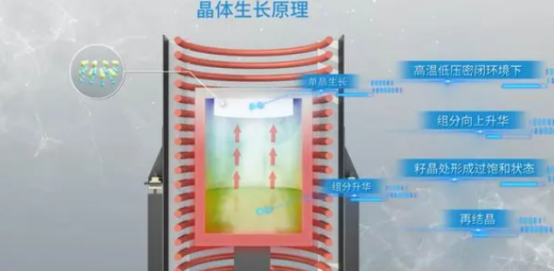
With the rapid development of science and technology, the pace of innovation in semiconductor materials has also accelerated. Following this...Following the first generation of semiconductors represented by Si and the second generation of semiconductors represented by GaAs, the third generation of wide-bandgap semiconductors represented by SiC is attracting increasing attention.
SiC has advantages such as wide bandgap, high critical breakdown field strength, high thermal conductivity, and high carrier saturation mobility, making it particularly suitable for manufacturing high-frequency, high-power, radiation-resistant, and corrosion-resistant electronic devices. It is one of the most promising materials in the field of semiconductor materials.
The development history of SiC crystal materials is over a hundred years. In 1892, Acheson invented a method for synthesizing SiC powder using silicon dioxide and carbon. In this process, a byproduct was discovered, which contained sheet-like SiC materials. However, these sheet-like SiC materials were of low purity and small in size, making them unsuitable for fabricating semiconductor devices.
untilIn 1955, Lely successfully grew relatively pure SiC crystals using sublimation technology, a process known as the Lely method. However, due to the small size and significant performance variations of SiC sheet materials produced by the Lely method, it could not become a commercially viable technology for growing SiC single crystals.
Between 1978 and 1981, Tairov and Tsvetkov improved upon the Lely method by introducing a seed crystal into the sublimation furnace. Based on thermodynamic and kinetic considerations, they designed a suitable temperature gradient to control the mass transport from the SiC source to the seed crystal. This growth process is known as the improved Lely method, also called the seed sublimation method or physical vapor transport (PVT). This method allows for the production of larger...Diameter and lower expanded defect densitySiC crystals. With continuous improvements in growth processes, companies that have industrialized this method include Cree and II-VI in the United States, SiCrystal in Germany, Nippon Steel in Japan, and Shandong Tianyue and Tianke Heda in China.
existIn the PVT method, many factors influence the synthesis of SiC crystals. Among them, SiC powder, as a raw material, directly affects the growth quality and electrical properties of SiC single crystals. Chen Zhizhan et al. studied the phase changes of SiC powder during growth and their impact on the uniformity and defects of single crystals. They found that when using β-SiC powder to grow SiC single crystals, a phase transformation to α-SiC occurs during crystal growth, resulting in a large change in the Si/C molar ratio in the gas phase, which adversely affects crystal growth. To improve crystal uniformity and reduce defects such as microtubes, the raw materials must be pre-calcined. This promotes crystal transformation and increases powder particle size, while also reducing impurity content. Shin et al. studied the effects of SiC powders with different particle sizes and impurity contents on SiC single crystal growth, finding that most impurities in the single crystal originate from the SiC powder, and the quality of the single crystal is linearly related to the purity of the powder.
becauseSiC powder plays a crucial role in single crystal growth, and in recent years, the preparation of high-purity SiC powder has gradually become a research hotspot in the field of SiC single crystal growth. Currently, companies capable of mass-producing high-purity SiC powder include China's Tianke Heda, France's Saint-Gobain, and Japan's Pacific Chemical. The purity and price of SiC powder synthesized by different companies vary. Statistics show that the particle size of these SiC powders is approximately 300–500 μm, with a purity (mass fraction) between 99.95% and 99.9999%, and a price between 2,000 and 12,000 yuan/kg.
These companies synthesizeThere are three main methods for preparing SiC powder: the first is the solid-phase method, the most representative of which are the Acheson method and the self-propagating high-temperature synthesis method; the second is the liquid-phase method, the most representative of which are the sol-gel method and the polymer thermal decomposition method; and the third is the gas-phase method, the most representative of which are chemical vapor deposition (CVD) and plasma methods. The Acheson method was the earliest method used to prepare SiC powder. Due to the wide availability of raw materials and large production volume, it is the most commonly used method for large-scale preparation of SiC powder. However, it is easy to introduce other impurities during the preparation process, resulting in low purity of SiC powder, which cannot meet the requirements for the growth of SiC single crystals.